TEL:13526590898
 Scan to contact us
 Scan to view the mobile version


When Huang Renxun announced at CES 2026 with a resounding voice, "We cool our supercomputers with 45°C hot water, without the need for chillers," a technological revolution that would revolutionize the cooling of global computing power officially kicked off. NVIDIA's new Vera Rubin platform boasts a single-chip power consumption soaring to 2300W and a heat flux density exceeding 1000W/cm², pushing the limits of traditional copper cooling and low-temperature liquid cooling. Its exclusive standard configuration, the **"diamond copper composite cooling + 45°C warm water direct liquid cooling"** solution, not only serves as the ultimate key to breaking through the AI "thermal wall," but also enables Chinese forces such as the Ningbo Institute of Materials, Chinese Academy of Sciences, and Huanghe Whirlwind to stand on the global stage, igniting a new billion-dollar cooling track.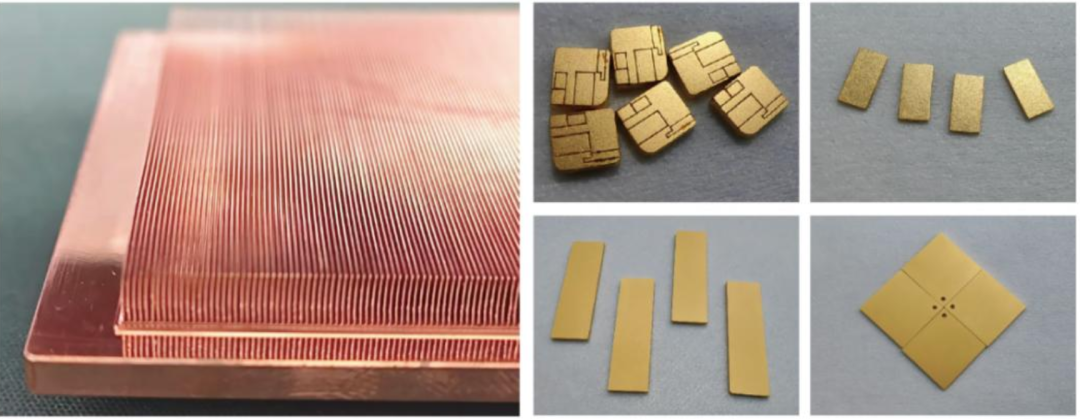
1. Ultimate Challenge: 2300W GPU Strains Traditional Cooling Systems - Why Does NVIDIA Favor This Solution?
The AI computing power competition has entered an intense phase of "power consumption competition". From 700W for H100, 900W for H200, to 2300W for Rubin chip, the heat generation of chips has skyrocketed exponentially, and traditional air cooling, copper base cold plate + 15℃ low-temperature liquid cooling solutions need improvement:
Thermal deadlock: Pure copper has a thermal conductivity of only 400W/m·K. Faced with heat points exceeding 1000W/cm², heat accumulation cannot be dissipated, and the chip temperature can easily soar to 100℃, leading to frequency reduction.
Energy consumption black hole: Traditional liquid cooling relies on chiller units to compress water temperature to 15℃, with refrigeration energy consumption accounting for 15%-30% of the total power consumption of the data center, resulting in a persistently high PUE.
Cost nightmare: Low-temperature liquid cooling requires corrosion-resistant special tubing and precise temperature control. When deployed globally, it has extremely poor adaptability in high-latitude and high-temperature regions, leading to soaring operation and maintenance costs.
The alternative solution provided by NVIDIA is a combination of "diamond copper composite heat sink + 45℃ direct liquid cooling with warm water". Both components are indispensable. Without the ultra-high thermal conductivity of diamond copper, the 45℃ warm water cannot effectively remove the 2300W heat. This solution demonstrated impressive results in practical tests at GTC 2026: the chip junction temperature remained below 80.9℃, the thermal resistance decreased by 28.5%, the computing power increased by 3 times, the cooling energy consumption dropped by 40%, and the PUE was further reduced to 1.05-1.10.
2. Hardcore Disassembly: How does Diamond Copper + Warm Water Liquid Cooling Subvert the Physical Limits of Heat Dissipation?
1. Diamond-Copper Composite Heat Dissipation: The strongest thermal conductivity in nature, the diamond-copper composite material can instantly smooth out chip hotspots. It is created by efficiently combining CVD-grown diamond flakes (100-300μm) with a copper substrate, perfectly integrating the ultimate thermal conductivity of diamond with the ease of processing and high structural strength of copper. Incredible thermal performance: Pure diamond has a thermal conductivity of 2200W/m·K (five times that of copper), while the thermal conductivity of the composite material remains stable at 900-1000W/m·K, which is 4-5 times that of traditional packaging materials.
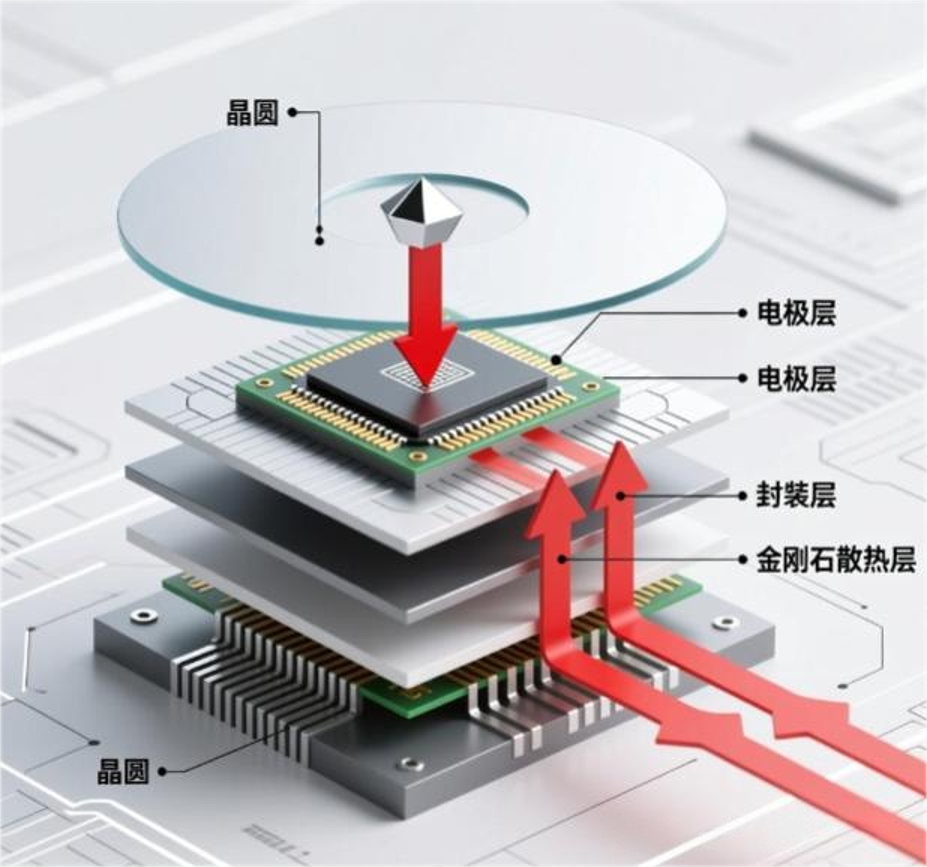
Structural Innovation Design: NVIDIA adopts "Tier 1 + Tier 2 packaging integration", utilizing diamond copper directly as the chip heat spreader to instantly remove core heat, and then evenly dissipating heat through an integrated microchannel cold plate.
Perfect thermal expansion matching: The thermal expansion coefficient is highly compatible with the chip silicon wafer, eliminating the risks of interface cracking and heat leakage under thermal cycling. It is suitable for extreme operating conditions ranging from -40℃ to 120℃
3. Breakthrough of Chinese Strength: Ningbo Institute of Materials Science Leads the Way, Domestic Diamond Copper Achieves the World's First Large-Scale Application
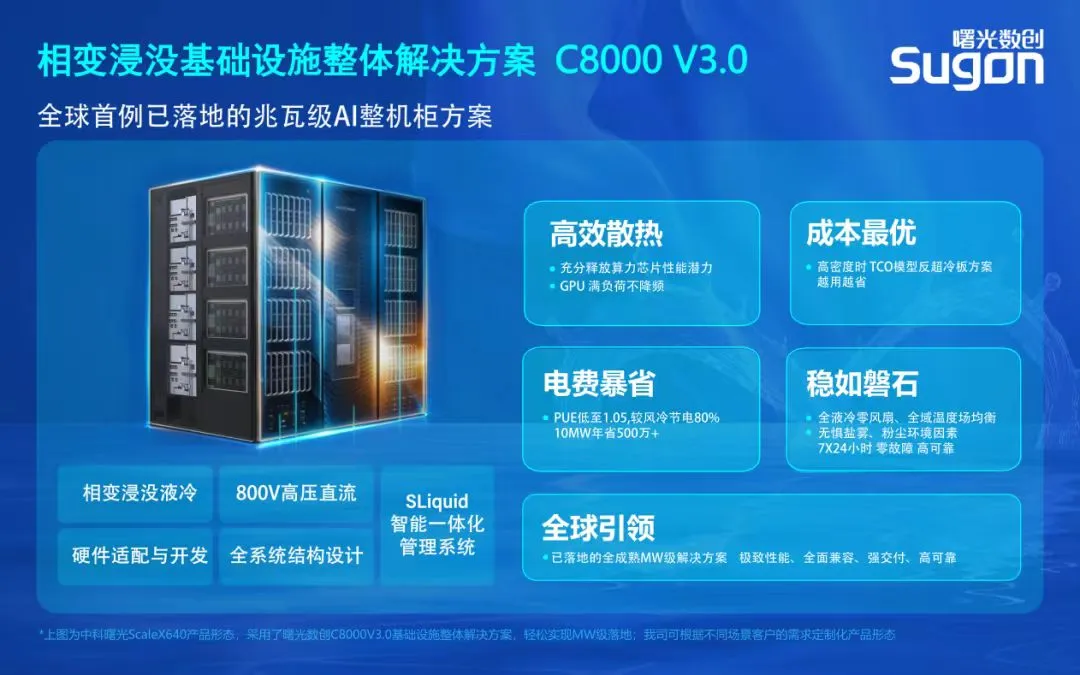
Recently, a breakthrough made by the Functional Carbon Materials Team at the Ningbo Institute of Materials Technology and Engineering, Chinese Academy of Sciences, has brought "diamond heat dissipation" from a technical concept to practical application. The high thermal conductivity diamond/copper heat dissipation module developed by the team has been successfully applied to the world's first megawatt-scale phase change immersion liquid cooling complete cabinet solution.
In the Dawning C8000 V3.0 solution, this material is applied to the thermal module on a large scale for the first time, enhancing the heat transfer capacity of the chip module by 80% and boosting the chip performance by 10%. Combined with self-developed domestic phase change refrigerant and immersed phase change liquid cooling heat transfer technology, the power density of a single cabinet exceeds 900kW (3-5 times that of traditional liquid cooling solutions), with a heat dissipation capacity exceeding 200W/cm², and achieving natural cooling throughout the year.
Industry implementation: Leveraging Ningbo Saimo Technology (with strategic investments from the Chinese Academy of Sciences and Huawei) and Jiangxi Copper, we aim to achieve large-scale mass production. Simultaneously, we will supply products to domestic AI manufacturers such as Huawei and Cambricon, completing the full-chain verification from the laboratory to national engineering projects.
Meanwhile, the domestic industry chain has rapidly emerged, fully benchmarking against NVIDIA's supply chain:
Huanghe Whirlwind: It has built the first 8-inch diamond heat sink production line in China, with a thermal conductivity of 2000-2200W/m·K, becoming a core supplier of NVIDIA's diamond copper module.
Harbin Yisheng New Materials: Secured investment from Huawei's Habo, achieved mass production of diamond copper products, and adapted to the Ascend chip liquid cooling solution.
Inveco and Gaolan shares: secured orders for NVIDIA Rubin platform microchannel cold plates and UQD quick connectors, becoming a global supplier of liquid cooling core components.
This application has entered the core node of the national supercomputing Internet plus, verifying the reliability of domestic diamond cooling technology in extreme heat flow environments and providing a "Chinese solution" for the global computing industry. Meanwhile, industry giant NVIDIA has also made plans, with its next-generation Vera Rubin architecture GPU fully adopting the "diamond-copper composite cooling + 45℃ direct liquid cooling with warm water" solution, further confirming the global industry consensus on diamond cooling.
Leveraging its leading edge in the field of synthetic diamond, China has established a comprehensive layout spanning from material preparation to industrial application. The following core aspects will benefit from this:
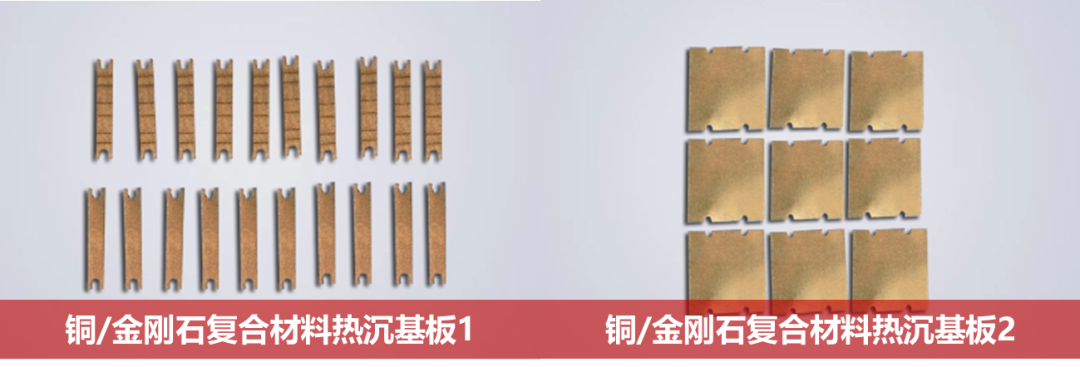
1. Preparation of diamond-copper composite materials:
The combination of diamond and copper is a core direction in current heat dissipation applications. These composite materials possess both high thermal conductivity and ease of processing, making them ideal heat dissipation materials for high-power AI chips and megawatt-scale computing cabinets. Relevant companies are accelerating mass production, and are expected to seize market opportunities.
2. Manufacturing of CVD Diamond Heat Sink Chips.
CVD diamond heat sink chips represent a segment with high technical barriers and significant value increment in the industry chain. They are directly attached to the surface of chips for heat dissipation, performing the core function of "extracting" heat from the interior of the chips. The first 8-inch production line in China has been put into operation, with products achieving a thermal conductivity of 2000-2200W/m·K. These products have been validated and applied in batches by leading enterprises.
3. Integration of composite cooling module and liquid cooling system:
Domestic cooling modules have been adapted to megawatt-scale phase change immersion liquid cooling complete cabinets, achieving a dual improvement in heat transfer efficiency and chip performance. The engineering capabilities of liquid cooling system integrators at the complete cabinet level are a crucial link in the transition of diamond cooling materials from the laboratory to large-scale applications.
From the world's first large-scale application by the Ningbo Institute of Materials Science, Chinese Academy of Sciences, to the comprehensive adoption of NVIDIA's Vera Rubin architecture, diamond cooling is experiencing a critical turning point from "technology verification" to "industrial explosion". As the AI computing power competition enters the "nanoscale", cooling solutions are also moving towards the "diamond level"; this is not only an inevitable trend of industrial upgrading, but also a footnote to the era when China's high-end materials have moved from following to keeping pace.
4. Follow-up across the industry: Google, Meta, and Huawei collectively get on board, making diamond copper liquid cooling a hot commodity
Nvidia's benchmarking effect quickly triggered a collective follow-up from global technology giants, with **"diamond copper + high-temperature liquid cooling"** becoming the unified standard for AI computing power cooling:
Meta: The next-generation AI supercomputer fully adopts diamond copper cold plates and 50℃ warm water liquid cooling, with a PUE target reduced to 1.08, saving over 120 million kWh of electricity per year for a single cluster.
Microsoft Azure: The data center deploys a diamond copper immersion liquid cooling solution, compatible with AMD MI350X GPUs, which improves cooling efficiency by 60% and reduces construction costs by 25%.
Huawei: The Ascend 910B and Kunpeng 920 chips are equipped with domestically produced diamond copper cooling modules, paired with 48°C warm water direct liquid cooling, achieving a power density of over 120kW for the entire cabinet.
Cambrian: The Siyuan 590 chip adopts a diamond copper heat sink combined with a cold plate liquid cooling system, achieving a 40% increase in computing power per cabinet and a 35% reduction in energy consumption.
Intel: The Xeon 6 series server introduces a diamond copper custom cooling solution, supporting 45°C warm water cooling and fully compatible with AI clusters.
5. Industrial Explosion: Hundred Billion-Yuan Market Opens, Domestic Substitution Ushers in a Golden Decade
As the penetration rate of AI servers surges from 20% in 2025 to 37% in 2026, the diamond-copper composite cooling + high-temperature liquid cooling market is experiencing explosive growth.
Market size: By 2026, the global AI liquid cooling market is expected to surpass $17 billion, while the diamond copper heat dissipation material market will exceed $8 billion, with a compound annual growth rate (CAGR) exceeding 120%.
Supply chain landscape: Internationally, Sumitomo Electric Industries and Akash Systems are leading the way; domestically, a first-tier group consisting of Ningbo Institute of Materials, Saimo Technology, Huanghe Whirlwind, and Yisheng New Materials has been formed, rapidly achieving domestic substitution.
Core value: A single AI server requires 1-2 diamond copper heat sinks, 8-12 liquid cooling connectors, and 1 set of microchannel cold plates, with a value of over 50,000 yuan per single cabinet. With the increasing volume of platforms such as Rubin and Ascend, orders in the industry chain will continue to surge.
Conclusion: China has never been absent from the heat dissipation revolution
From the official standard configuration of NVIDIA's Rubin platform to the large-scale implementation in national supercomputing centers, diamond-copper composite cooling combined with 45℃ direct liquid cooling using warm water has evolved beyond being merely a technological innovation. It has become a strategic core that defines the upper limit of AI computing power. The technological breakthroughs made by the Ningbo Institute of Materials, Chinese Academy of Sciences, and the industrial implementation by companies like Huanghe Whirlwind, have transformed China from a follower to a leader in this global cooling revolution.
Recommendations for diamond-related suppliers
Over the past decade, diamond/copper composite materials have primarily been active in cutting-edge scientific research fields due to their high cost and process difficulty. Lenovo's large-scale adoption marks that the supply chain and processing precision of this material have reached the level of consumer-grade mass production. With the continuous maturity of interface modification technology and forming processes, diamond copper will no longer merely serve as a supporting role in heat sinks. Instead, it will become the "core framework" of a new generation of thermal management systems, supporting a future electronic era with higher integration and stronger computing power.
Currently, domestic and international suppliers of diamond thermal management materials include Element Six, A.L.M.T. Corp, Diamond Foundry, Applied Diamond, Diamond Materials, Leo Da Vinci Group, DiamNeX, Huifeng Diamond, Huanghe Whirlwind, Sanmo Institute, Preciosa, Feimeng Diamond, Ningbo Jingzuan, Harbin Yisheng, Zhongnan Diamond, World, Sifangda, Yujin Diamond, Jingxin Green Diamond, Wuxianzuan, Derunsi, Changrun Jirui, Baililai, Huheji Dian, Luoyang Yuxin, Sinoma High-Tech, Carbon Core Material, Xian Dian Crystal, Changfei Optical Fiber, Youyan Group, Saimo Technology, Ruiwei New Material, Ruishixing, Beijing Antai Steel Research Superhard Materials Products Co., Ltd., Jiangyin Huilong Technology Co., Ltd., Chengdu Glaixi Material Technology Co., Ltd., Henan United Precision Materials Co., Ltd., Ningbo Silicon Harbor Composite Materials Technology Co., Ltd., Changsha Shenghua Microelectronic Materials Co., Ltd., Youpin New Material, Shanghai Changrun, and other enterprises are actively laying out their industrial tracks and launching diamond thermal management products.