
TEL:13526590898
 Scan to contact us
 Scan to view the mobile version


On February 25th, it was reported that a research team at Rice University in the United States has developed a scalable patterned diamond heat dissipation layer technology. This innovation can directly reduce the operating temperature of electronic devices by 23°C, offering a new engineering pathway to address the thermal bottleneck in high-power chips. The related research findings were published on February 23rd in the internationally renowned journal Applied Physics Letters.

A Method for Growing Patterned Diamond Surfaces
Diamond, with its ultra-high thermal conductivity, has long been regarded as the "gold standard" in heat dissipation materials. However, its extreme hardness presents significant processing challenges, which have long limited its practical application in the chip industry. Traditional "top-down" methods require preparing a complete diamond block first, followed by cutting and engraving. Not only is this approach costly, but it also risks damaging the material, making it difficult to meet the demands of large-scale semiconductor production.
To address this pain point, the research team at Rice University has innovatively proposed a "bottom-up" diamond growth strategy. This method involves precisely constructing a thermally conductive diamond layer directly on the chip surface, bypassing the limitations of traditional processing.
The core of this technology utilizes microwave plasma chemical vapor deposition, a process that is clear, scalable, and suitable for mass production:
The research team points out that the nucleation step is the key to the technology, directly determining the crystal structure and thermal conductivity efficiency of the diamond. Controlled growth enables precise heat extraction, significantly improving thermal dissipation efficiency.
The flexibility and compatibility of this process are its core advantages for industrialization. For high-resolution, complex scenarios, lithographic seeding technology is employed, while for large-area applications, laser-cut film solutions are adaptable, catering to various chip manufacturing needs. Additionally, the process is fully compatible with mainstream semiconductor substrates such as silicon and gallium nitride, allowing seamless integration into existing semiconductor production lines.
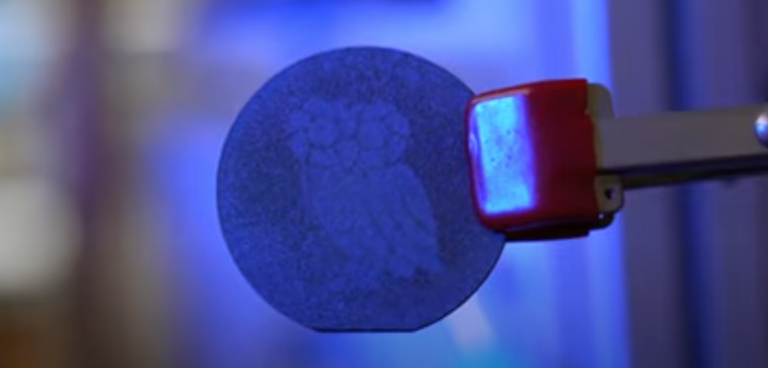
Assistant Professor of Materials Science and Nanoengineering Xiang Zhang stated that heat is a core factor limiting the performance of electronic devices. A reduction of 23℃ holds significant engineering value, as it can both extend device lifespan and enhance chip operating speeds within safe temperature ranges.
Currently, this technology has been successfully scaled to 2-inch wafer manufacturing, validating its feasibility for mass production. Project leader Professor Pulickel Ajayan noted that the team has identified an efficient and viable pathway to integrate diamond heat dissipation technology into electronic devices. In the future, it holds the potential to empower AI chips, 5G hardware, mobile phones, batteries, and high-performance computing devices, comprehensively improving their efficiency and reliability.
It is understood that in the next phase, the team will focus on optimizing the interface bonding between the diamond layer and the underlying device to further enhance structural integration. A breakthrough in this aspect would clear a critical barrier for the development and mass production of next-generation high-speed, high-power transistors, propelling semiconductor thermal management technology into the diamond era.